
What do New York's cooling systems, an outbreak in Gatineau and artificial intelligence have in common?
The summer of 2026 has brought a number of news stories connected, directly or indirectly, to Legionella bacteria and the microbiological risks associated with water systems.
In Gatineau and Ontario, several cases of legionellosis were confirmed while authorities were still working to identify their source. In New York, a major outbreak led investigators to dozens of contaminated cooling towers. Meanwhile, the construction of an artificial intelligence data centre in Wyoming raised other concerns about the microbiological quality of water.
At first glance, these events seem very different. Yet they all highlight the same reality: when a water system provides conditions favourable to microbial growth, the consequences can extend well beyond a building's boundaries.
But what really connects these events?
Let's take a closer look at these news stories.
What exactly is Legionella?
Legionella is an environmental bacterium naturally present in small quantities in certain aquatic environments. However, it can multiply in artificial water systems when conditions are favourable.
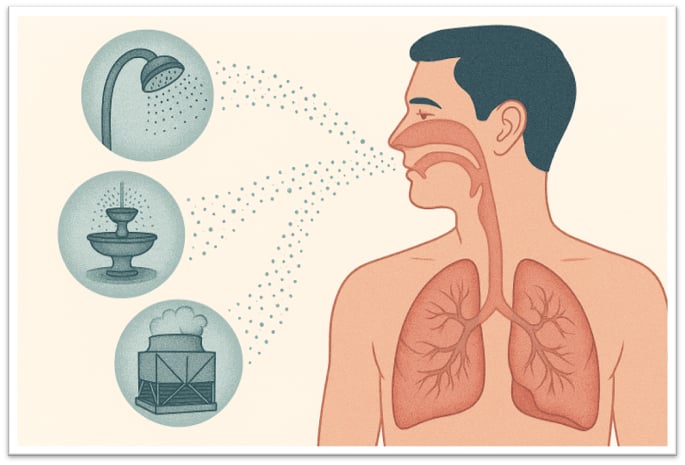
When contaminated water is dispersed as fine droplets or aerosols, a person can inhale the bacteria. Legionella can then cause legionellosis, a term that covers different forms of infection.
The most serious pulmonary form is called Legionnaires' disease. It is a type of pneumonia that can require hospitalization, particularly among older adults, smokers, people with weakened immune systems and those with certain chronic illnesses.
The illness is generally not contracted simply by drinking water. The main risk arises when contaminated water is turned into fine droplets that can be inhaled.
Examples of installations that can produce aerosols include:
- water cooling towers;
- showers and certain hot-water systems;
- spas and hot tubs;
- certain decorative fountains;
- humidifiers and mist-producing equipment;
- certain industrial processes that use water.
Why are cases more common during the warmer months?
Cases of legionellosis are generally more common in late spring and during the summer.
However, outdoor temperature does not explain everything.
Several factors can encourage the growth of Legionella in a water system:
- water temperatures favourable to its growth;
- stagnation or limited water circulation;
- the presence of biofilms;
- the accumulation of deposits or sediment;
- insufficient disinfectant concentrations;
- inadequate maintenance;
- a shutdown period followed by restarting;
- the production and dispersal of aerosols.
Warmer weather can increase the use of certain cooling systems and create temperatures favourable to bacterial growth in some installations. However, the risk always depends on a combination of factors.
Finding the source: a complex investigation
When someone is diagnosed with Legionnaires' disease, it is not always easy to determine where they were exposed.
The person may have visited several buildings, used different showers, visited a public facility or been near an installation that produces aerosols. Public health teams must therefore retrace their movements and look for common exposures among the cases.
Samples may then be collected from several installations. Environmental results are compared with epidemiological information and, where possible, with the strains detected in the people affected.
“Finding the source of an outbreak can be a complex investigation. Several installations need to be examined, different samples analysed, and the results checked against the human cases. Even then, the source is not always identified with certainty.”
— Amélie Bombardier, microbiologist at Lab'Eau-Air-Sol
The absence of a confirmed source does not necessarily mean there was no environmental source. Rather, it means that the information collected did not establish a sufficiently strong connection.
Despite investigations and testing, the origin of an outbreak can therefore remain unknown. This was the case in Gatineau, where authorities were still working to identify the source of the infections when the available information was published.
Outbreak in Gatineau
Most cases in the Aylmer area
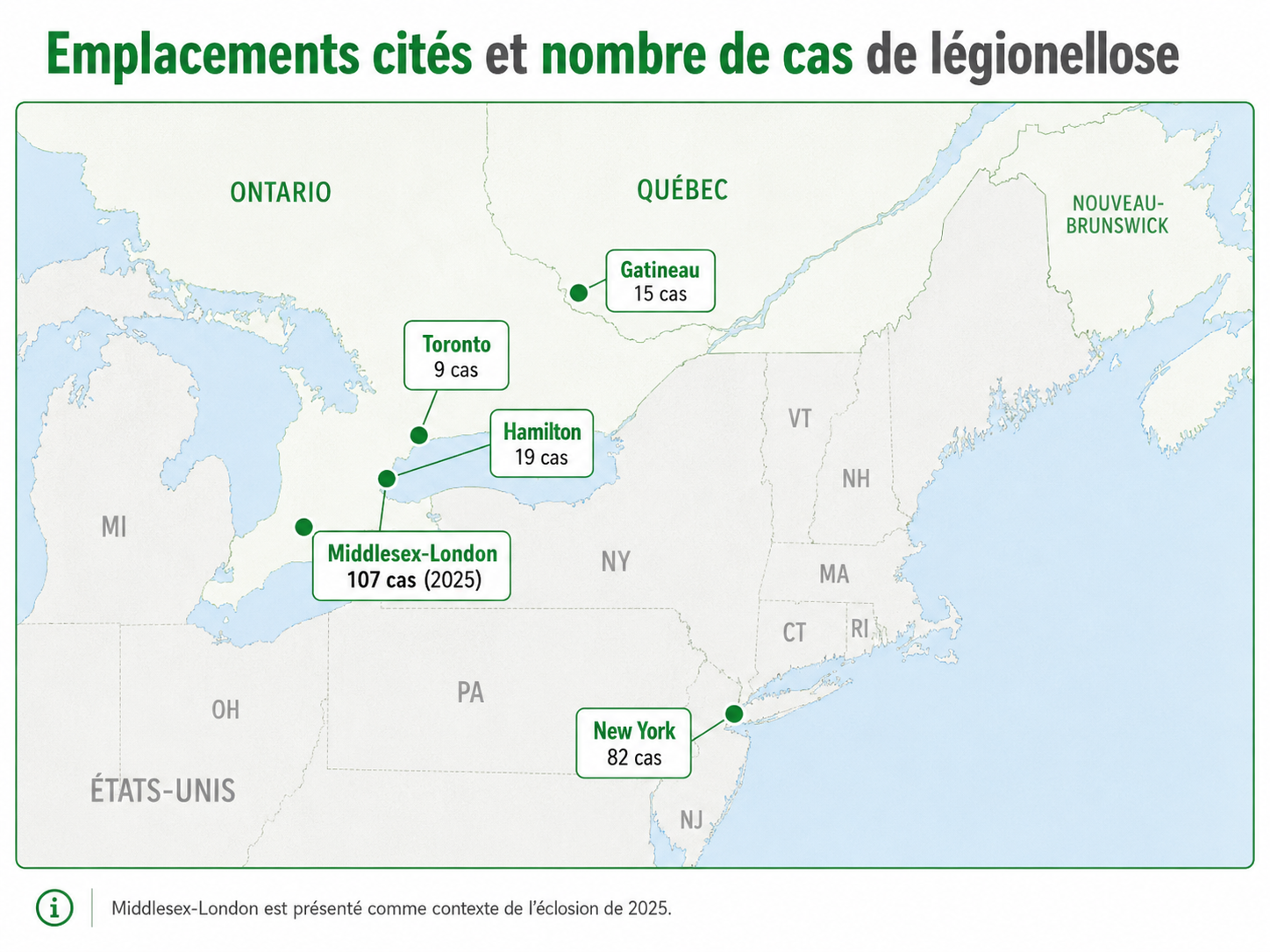
Figures announced by Santé Québec Outaouais
One week earlier, the reported total was nine cases.
Decontamination had already been carried out in certain areas potentially associated with the infected individuals. However, the investigation was continuing to identify the source or sources of exposure more precisely.
This situation illustrates the complexity of a legionellosis investigation. Even when several cases are reported in the same area, different installations may need to be examined before a connection can be confirmed.
A concerning situation in Ontario
The situation in Gatineau was not an isolated case. In spring and summer 2026, several clusters were also reported in Ontario.
Toronto: an outbreak detected early in the spring
The affected individuals had been identified in late March and early April. They were in the same geographical area, suggesting a possible common exposure.
Samples were collected from different water systems that could have been involved. However, no specific source had been publicly identified at that point. Authorities considered the risk to the wider population to remain low.
Hamilton: a second cluster in Ontario
A few weeks later, Hamilton Public Health was also investigating a cluster of cases in East Hamilton and Stoney Creek.
Here too, no common source had been confirmed when the first public notices were issued.
The situations in Toronto and Hamilton show that even when a cluster is recognized quickly, identifying the installation responsible can take time and does not always lead to a definitive conclusion.
An earlier-than-usual increase in Ontario
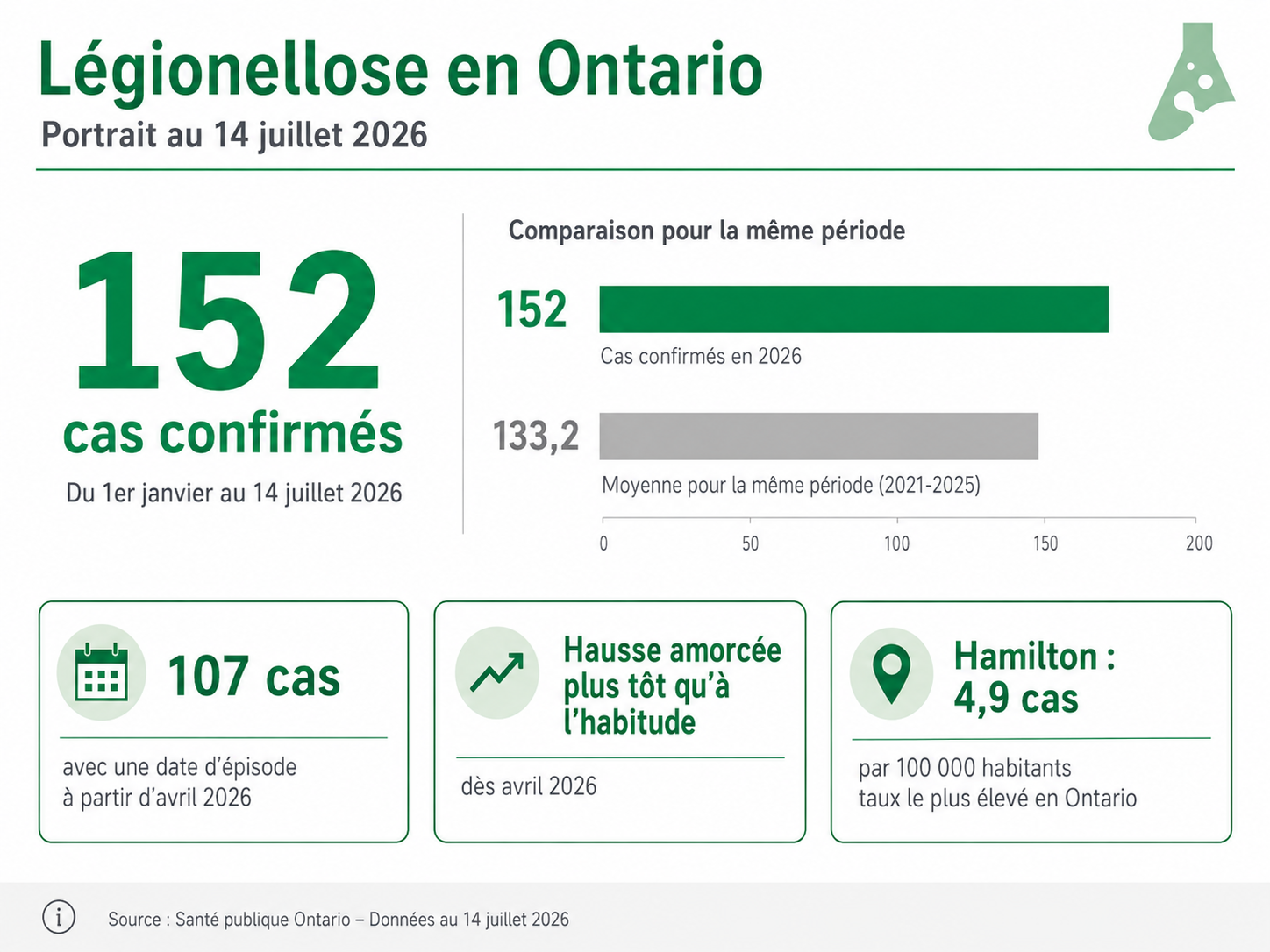
In Ontario, cases of legionellosis began increasing as early as April 2026, earlier than is generally observed.
Between January 1 and July 14, 2026, Public Health Ontario had reported 152 confirmed cases. For the same period over the previous five years, the average was 133.2 cases.
Among the cases reported in 2026, 107 had an episode date in April or later. Hamilton then had the highest legionellosis rate among the province's public health units, at 4.9 cases per 100,000 residents.
However, widely reported outbreaks account for only part of the situation. Many cases are sporadic and are never conclusively linked to a common source.
An important precedent: Middlesex-London
The events of 2026 also followed a year marked by a major outbreak in the Middlesex-London region in 2025.
The provincial report published in 2026 identified 107 cases associated with that outbreak, more than one-quarter of all Ontario cases reported in 2025.
This event is a reminder of how large an outbreak can become when a contaminated installation produces and disperses aerosols into its surroundings.
New York: cooling towers at the centre of the investigation
In New York, the summer of 2026 was marked by a major outbreak in Carnegie Hill and Yorkville on Manhattan's Upper East Side.
As of July 21, authorities had reported 82 cases and five deaths. The City had sampled 183 cooling towers serving 160 buildings.
Of these:
- 77 towers tested positive during initial PCR screening;
- 34 towers in 33 buildings were subsequently confirmed by culture to contain live bacteria;
- the affected installations were cleaned and disinfected.
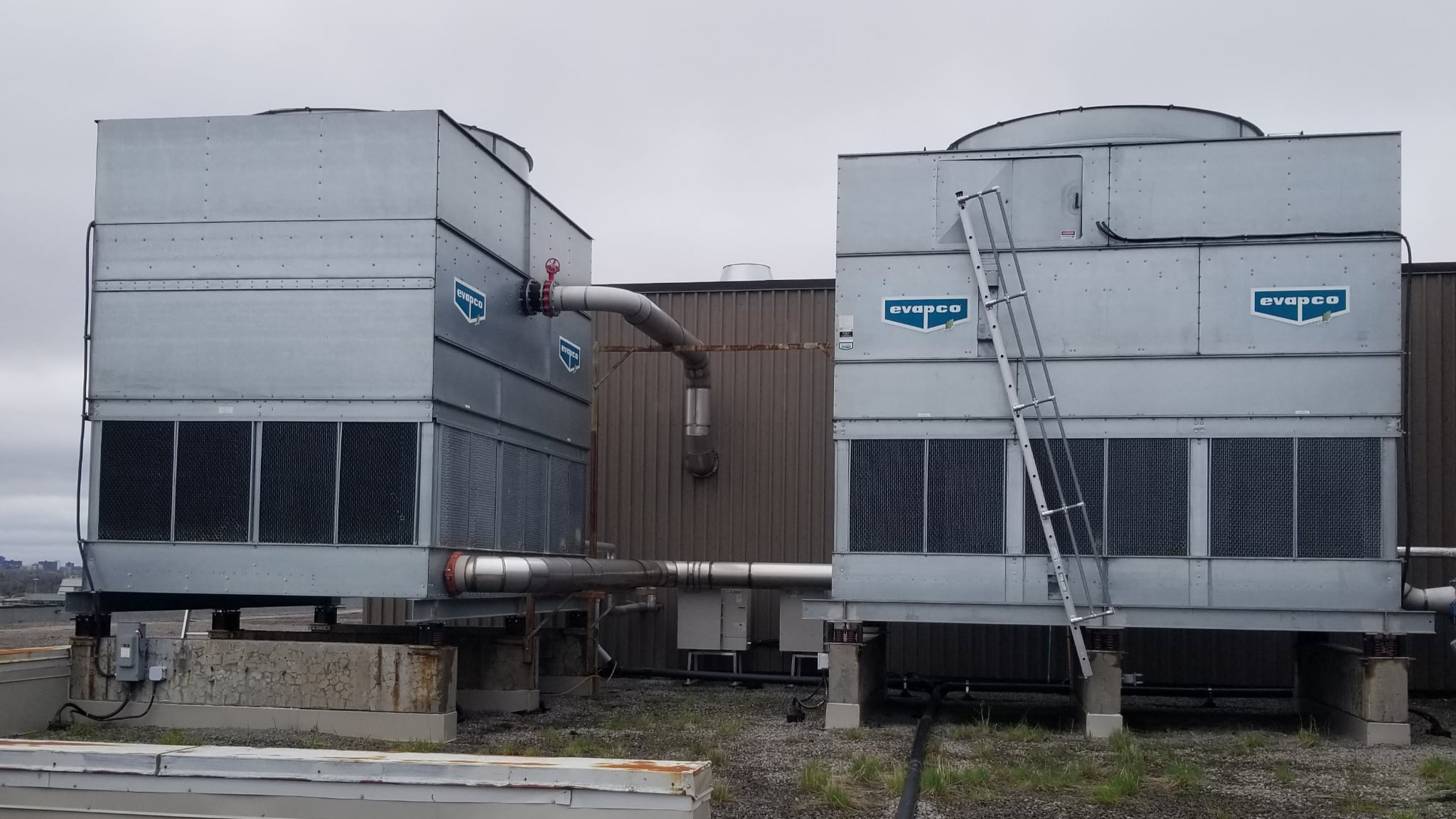
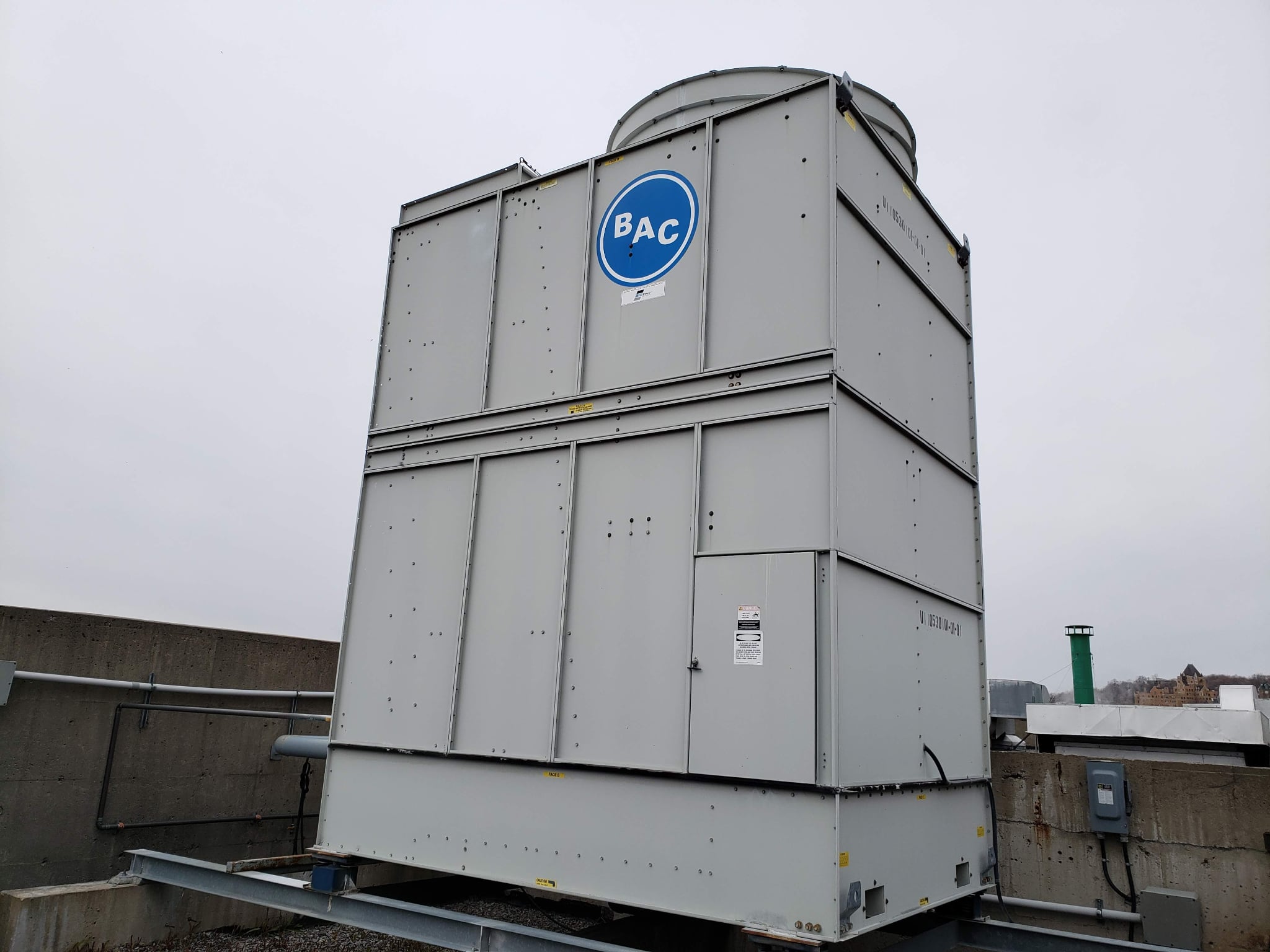
Cooling towers release heat generated by certain air-conditioning systems, industrial processes and large buildings.
Contrary to a common misconception, they do not release the building's indoor air. Instead, they use water to transfer heat outdoors. During this process, they can produce fine droplets that disperse into the surrounding environment.
When a tower is contaminated with Legionella and is not adequately controlled, these aerosols can expose people nearby, even if they have never entered the building concerned.
This is why cooling towers are a well-known potential source investigated during community outbreaks.
Are regulations enough?
The New York outbreak also renewed discussions about cooling tower inspections, transparency of results, the speed of intervention and enforcement of existing rules.
New York already has regulations governing cooling towers. Strengthened reporting, sampling and maintenance requirements had also come into force in 2026.
Nevertheless, an outbreak still occurred.
This does not mean regulation serves no purpose. On the contrary, it provides an essential framework. However, it cannot eliminate all risk if programs are not implemented rigorously, an installation fails, or corrective action is not taken quickly enough.
Regulation must be accompanied by:
Preventive measures already exist in Quebec
In Quebec, the Régie du bâtiment du Québec regulates water cooling tower installations, also known by the French abbreviation ITRE.
Owners must, among other requirements, implement a preventive maintenance program prepared and signed by a professional. The program aims to maintain the integrity of installations and limit the growth of Legionella pneumophila.
A register must also document maintenance, testing results and the interventions carried out.
However, prevention is not solely the responsibility of the tower owner. It depends on an entire chain of activities:
- installation design;
- maintenance;
- sampling;
- sample transport;
- laboratory analysis;
- interpretation of results;
- implementation of corrective measures.
Stricter requirements for laboratories
In Quebec, prevention does not depend solely on cooling tower maintenance. It also depends on the quality of sampling and the reliability of laboratory analyses.
The Centre d'expertise en analyse environnementale du Québec, or CEAEQ, recently updated the document Lignes directrices concernant les travaux analytiques en microbiologie de l'air, DR-12-SCA-08, as part of the Programme d'accréditation des laboratoires d'analyse, known as PALA.
Laboratories accredited for field 606 have until August 1, 2026, to implement the measures needed to meet these requirements.
This update is a reminder that a laboratory result does not depend solely on detecting the bacteria. Its reliability also depends on the method used, quality controls, equipment, staff expertise and traceability throughout the process.
“The laboratory's role is not limited to detecting Legionella. It also involves applying rigorous analytical methods, ensuring reliable results and providing data that helps facility managers and authorities decide how to respond.”
— Noémie Robert, microbiologist at Lab'Eau-Air-Sol
What does artificial intelligence have to do with it?
Did you know that artificial intelligence data centres can also create challenges for water quality?
Artificial intelligence requires immense data centres that operate around the clock. To prevent the thousands of servers they house from overheating, these facilities use complex cooling systems that may require large volumes of water.
An incident during the construction and commissioning of a Metadata centre in Wyoming showed that these facilities raise issues that go well beyond their energy consumption.
During filling and flushing of the cooling system's pipes, a rare environmental bacterium, Cupriavidus gilardii, was detected in the municipal recycled-water system in Cheyenne.
This water was mainly intended for irrigation and was separate from the drinking-water system. According to the information made public, drinking water was not affected.
This was therefore not an outbreak of legionellosis, and the bacteria detected were not Legionella.
However, the event highlights an often-overlooked reality: large industrial water systems must be designed, commissioned, maintained, cleaned and monitored with the same rigour as ventilation and air-treatment systems.
Inadequate management can encourage the presence or growth of microorganisms, contaminate other parts of a system and lead to significant and costly interventions.
In Cheyenne, the incident led to the suspension of filling and flushing operations, disinfection work and stricter practices for discharging water from data centres.
As these facilities multiply to meet the growing demands of artificial intelligence, water quality is becoming an essential consideration.
Commissioning protocols, preventive maintenance, discharge management and microbiological monitoring play an essential role in protecting infrastructure and limiting environmental risks.
Legionella is therefore not the only microorganism that deserves our attention.

Different events, a shared message
Gatineau, Toronto, Hamilton, New York and Cheyenne involve very different settings.
Some events involve confirmed human cases of legionellosis. Others involve environmental contamination by another bacterium. Some sources were identified, while others remain unknown.
Nevertheless, they share several features:
- complex water systems;
- the potential for microbial growth;
- the production or circulation of aerosols;
- sometimes challenging environmental investigations;
- the need for preventive maintenance;
- the importance of reliable testing;
- the need to act promptly when the situation requires it.
Above all, the events of 2026 remind us that it is better to understand and control risks before an outbreak occurs.
Rigorous preventive maintenance remains one of the best ways to protect installations, their occupants and people nearby. Microbiological monitoring helps us better understand a system's condition, assess the effectiveness of control measures and guide interventions when concerning results are obtained.
Sources
- TVA Gatineau — 15 confirmed cases of legionellosis in Gatineau
- Public Health Ontario — Legionellosis overview, January 1 to July 14, 2026
- Toronto Public Health — Toronto outbreak
- City of Hamilton — Investigation into the cluster in East Hamilton and Stoney Creek
- Public Health Ontario — Provincial legionellosis report for 2025
- New York City Department of Health — Upper East Side outbreak and cooling tower results
- Régie du bâtiment du Québec — Maintenance of water cooling tower installations
- Centre d'expertise en analyse environnementale du Québec — DR-12-SCA-08
- Centers for Disease Control and Prevention — Legionnaires' disease and transmission
- Forbes — Incident involving Meta's data centre in Cheyenne
- The Guardian — Recycled-water contamination and interventions in Cheyenne
- Business Insider — Recycled-water contamination and interventions in Cheyenne